This week, I worked on my presentation, focusing on the best ways to test Figma’s prototyping limits. While working on that, I still had a lot of mental reflection happening on the back burner regarding the thesis committee meeting I had last Friday. I was primarily brainstorming how I would tackle the narrative development and refinement for the actual final prototype. For that, I started by looking at the very first “Narrative Premise” I wrote down for when I started working on my thesis a while back. This helped me realize some of the major changes I am now going to make to the project.
Changes in the Narrative:
The way I was focusing on the narrative before was splitting it into different chapters, and every chapter would have a distinct visual style based on what the chapter is about. The user had the option of choosing which chapter they wanted to explore. The previous narrative premise is as follows:
“The story is about a character who seems to be holding it all together but is internally fighting a mix of physical and mental health challenges. The narrative takes you on a journey through the different stages of the character’s life. Each chapter of the story reveals a different struggle as you gradually see the bigger picture of resilience and growth. The story begins in a therapist’s office, where the character is asked what they want to share. This is the point of origin where you can choose what branch of the story you want to unfold. As you play the game, you see the character’s life, battles, and moments of clarity and acceptance that shape their growth journey. The narrative is divided into different chapters, each depicted in a distinct visual language to show a specific phase of the character’s life. The visual language also emphasizes the emotional tone and context of each chapter. Mental and physical health challenges are shown throughout the story, influencing the user experience and developing emotional investment.”
The changes I have made are not drastic, but they still take on a slightly different approach. The new narrative does not have “chapters” as initially planned, and so they don’t necessarily have a distinct art style for each either. They are now different impactful events where the visuals look slightly different than the base universal visual style of the entire story. The updated narrative premise is as follows:
“The story is about a character who seems to be holding it all together but is internally fighting a mix of physical and mental health challenges. The narrative takes you on a journey through the different daily life scenarios of the character’s life, each one revealing a different struggle as you gradually see the bigger picture of resilience and growth. The story begins in a therapist’s office, where the character is asked what they want to share. This is the point of origin where you can choose what branch of the story you want to unfold. As you play the game, you see the character’s life, battles, and moments of clarity and acceptance that shape their growth journey. The narrative is divided into different chapters, with slight changes in the visual language based on the scenarios. The visual language also emphasizes the emotional tone and context of each event. Mental and physical health challenges are shown throughout the story, influencing the user experience and developing emotional investment.”
The Presentation:
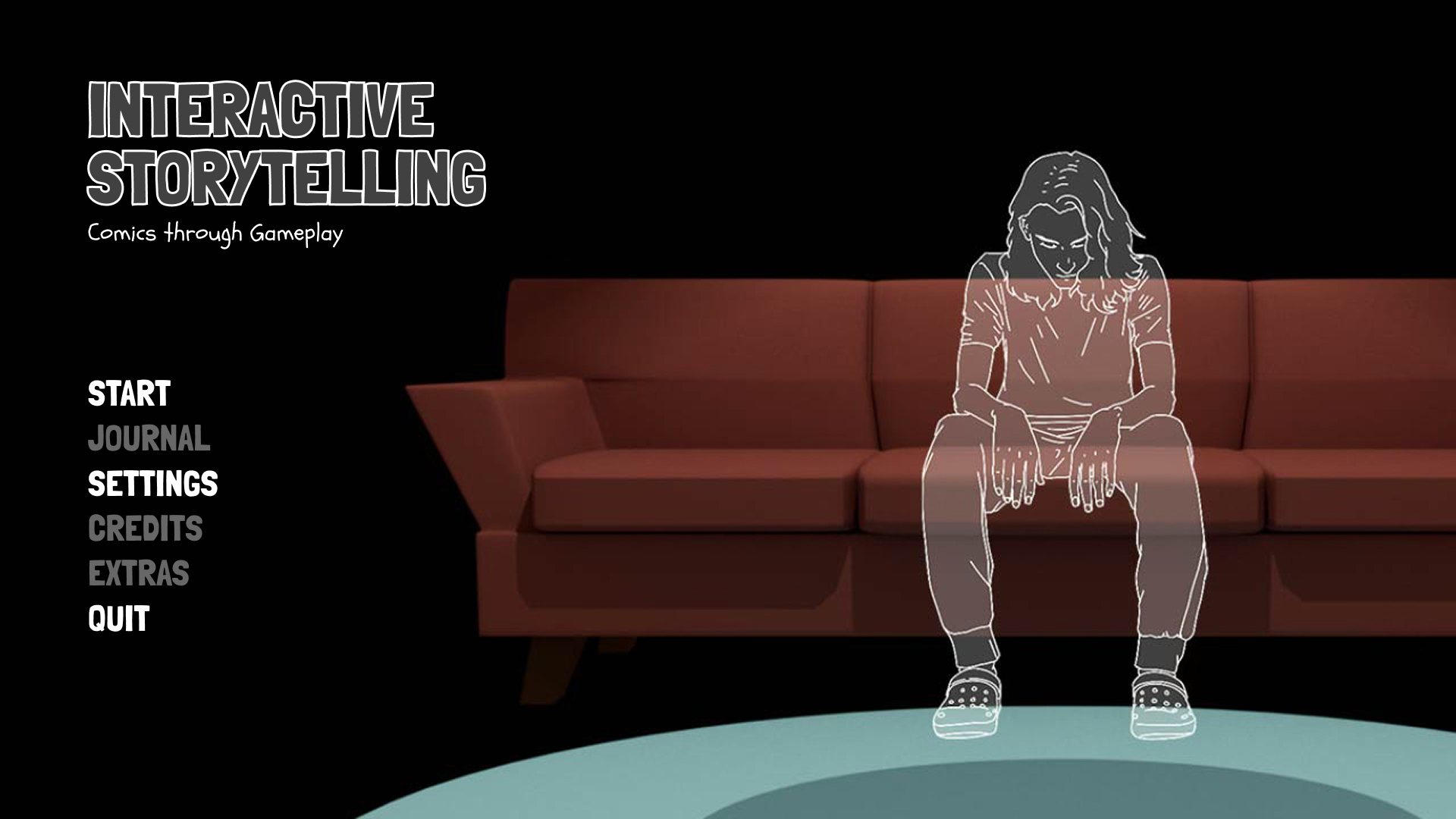
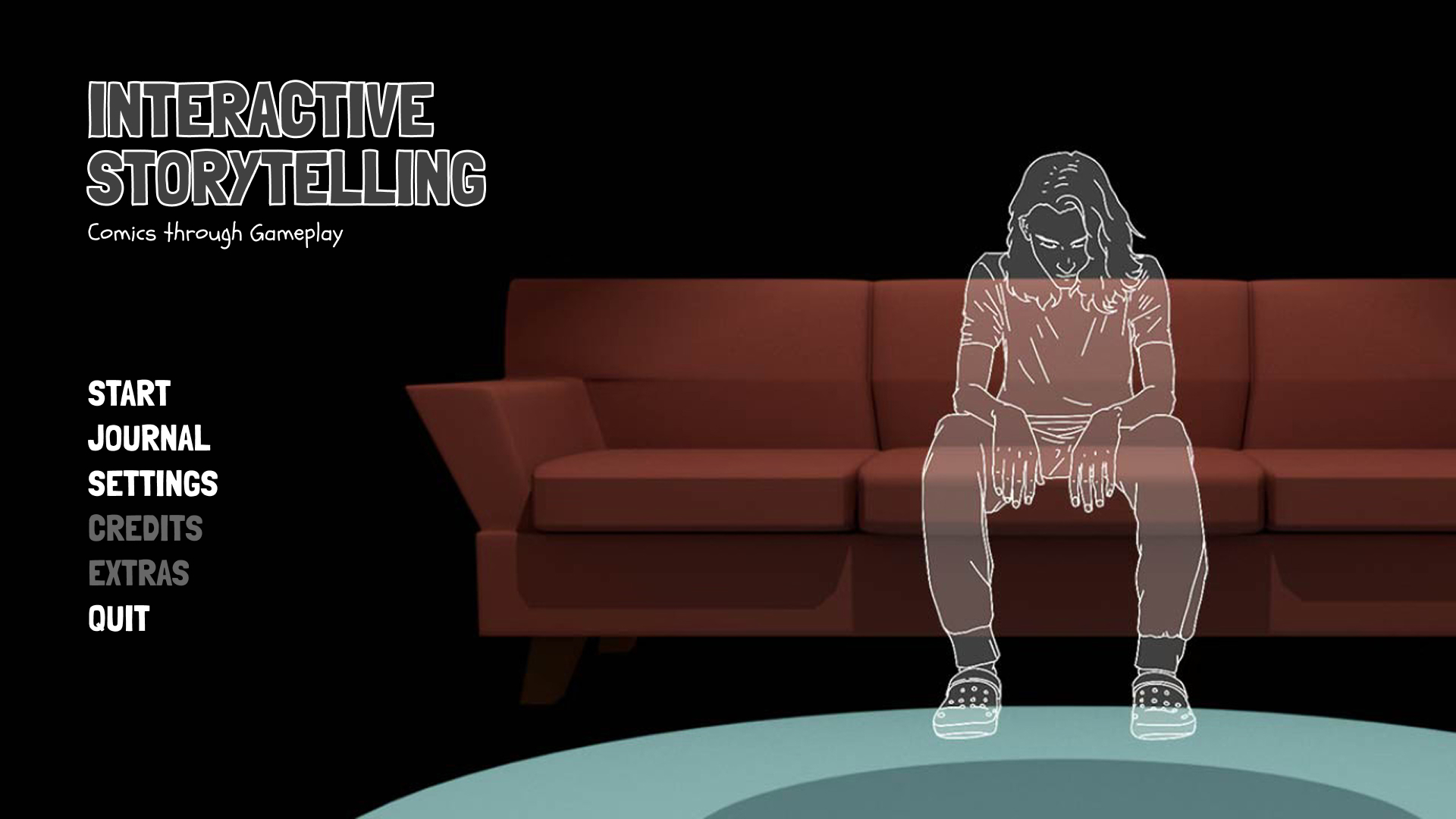
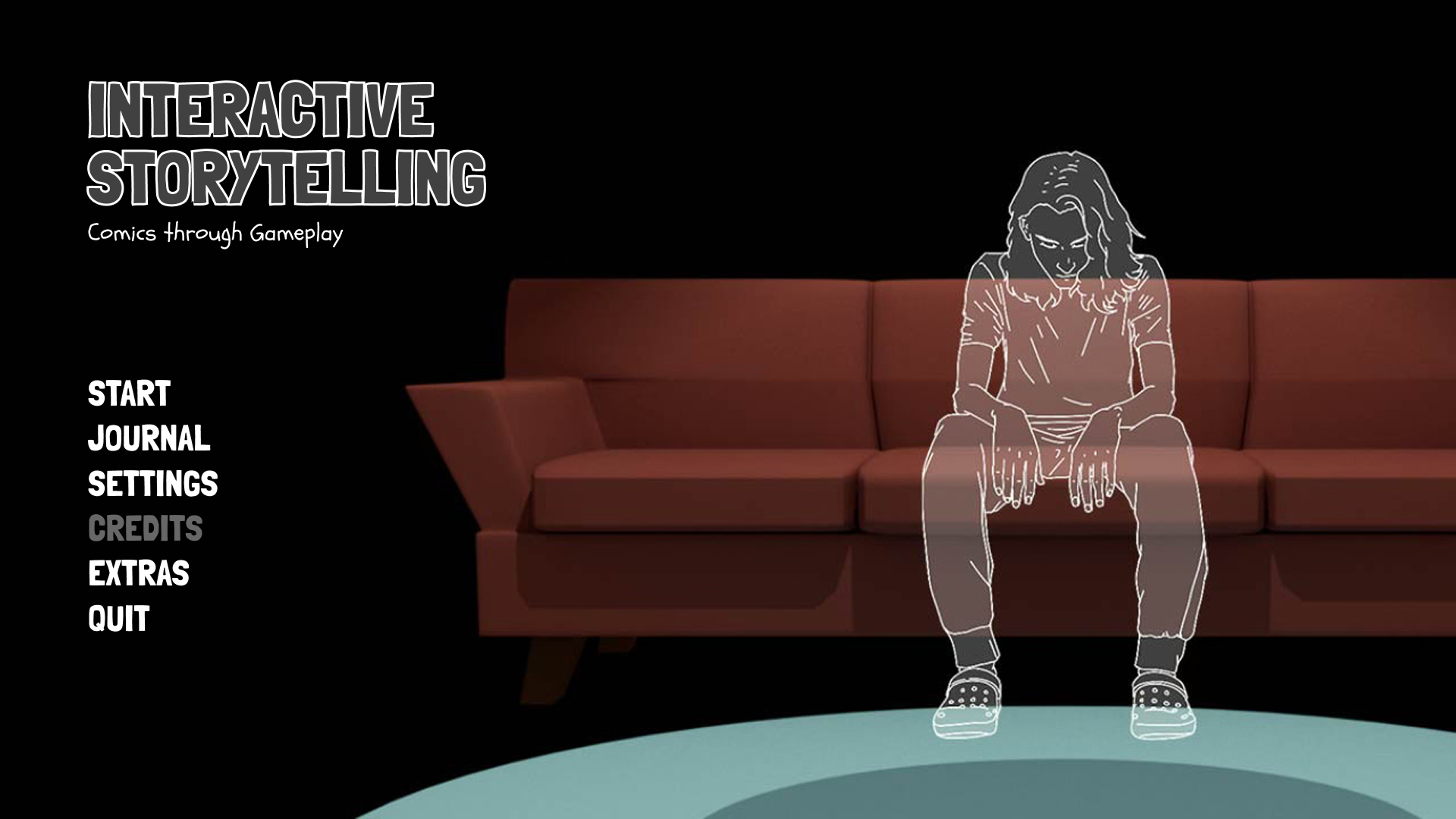
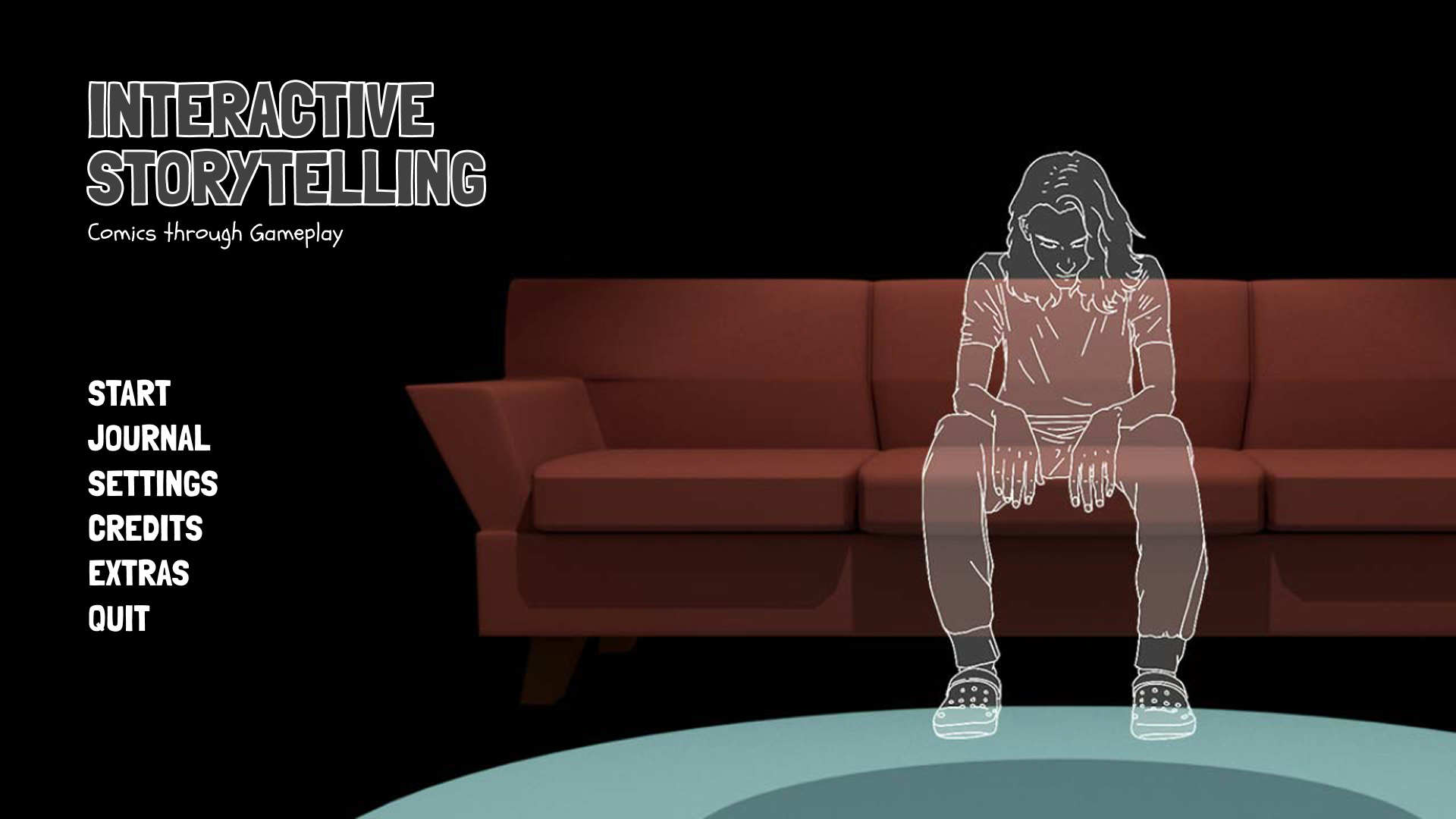
Moving on from where I was last week, I started from the different variations of the title screen that I would need. The first title screen has only one accessible option, to have the user directed towards that option, and as we progress, more options become available. As shown below in the images, the first screen only has the “Start” option accessible, but that goes without saying since that is the option you would ideally click on when starting a game. The second screen shows you have unlocked the “Journal” option, so naturally, you would click on that to go to the Journal screen, where you can see various options to explore. The third one, you get “Extras” unlocked, which some games give you access to after you have completed a certain percentage of the narrative/story, as having bonus features.
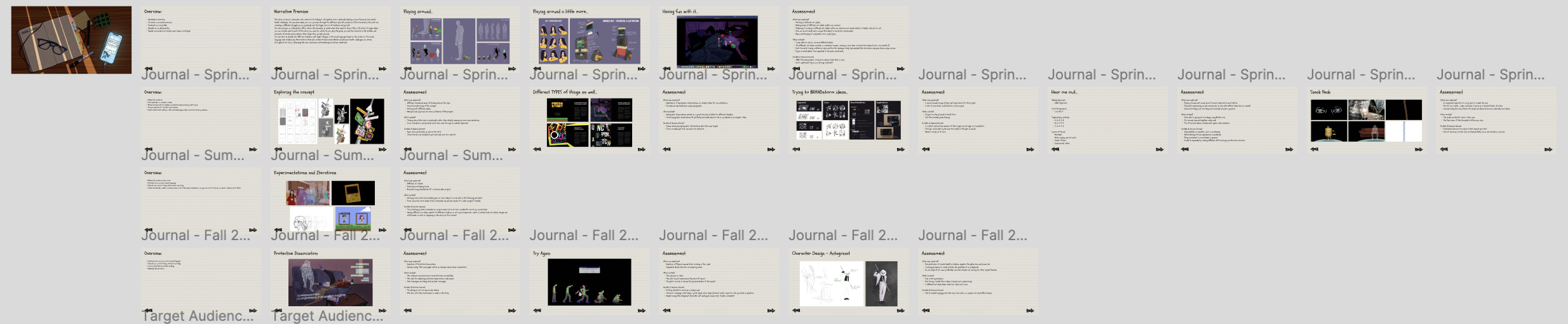
After getting that out of the way, I created the content slides for the first option: Start. This covers the introduction to the project, so things like what I am doing, why I am doing it, how I am going about it, and then my thesis committee. After that, I covered a big chunk of the slides for my progress. These are accessible through the “Journal” part, where you click on each semester’s tag to go through all the work I did during specific semesters. The format I am following for this is having the documentation of each project and then having an “Assessment” slide for each project where I mention what I explored in the project, what worked, and what didn’t work, and what I learned from each project.
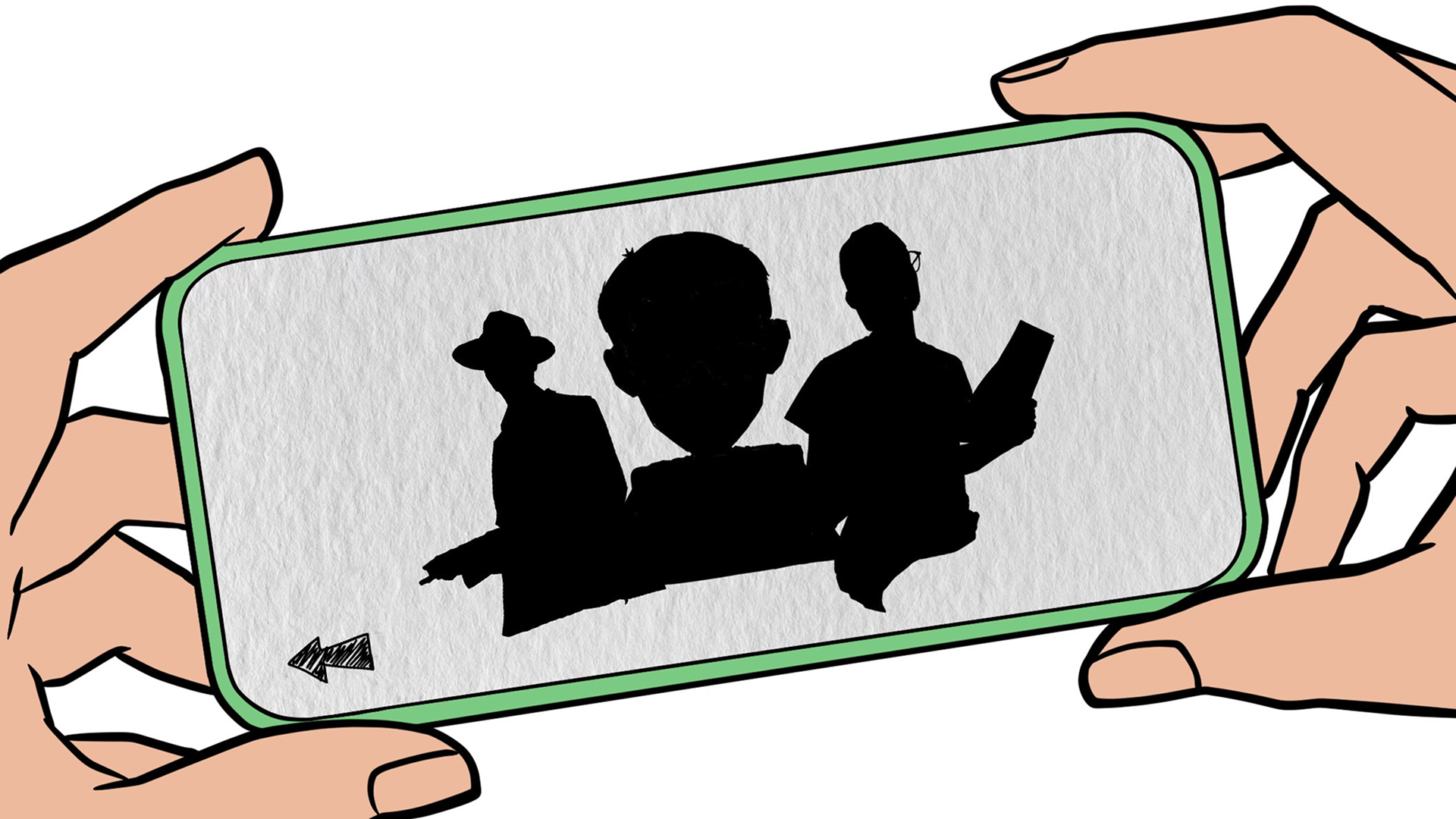
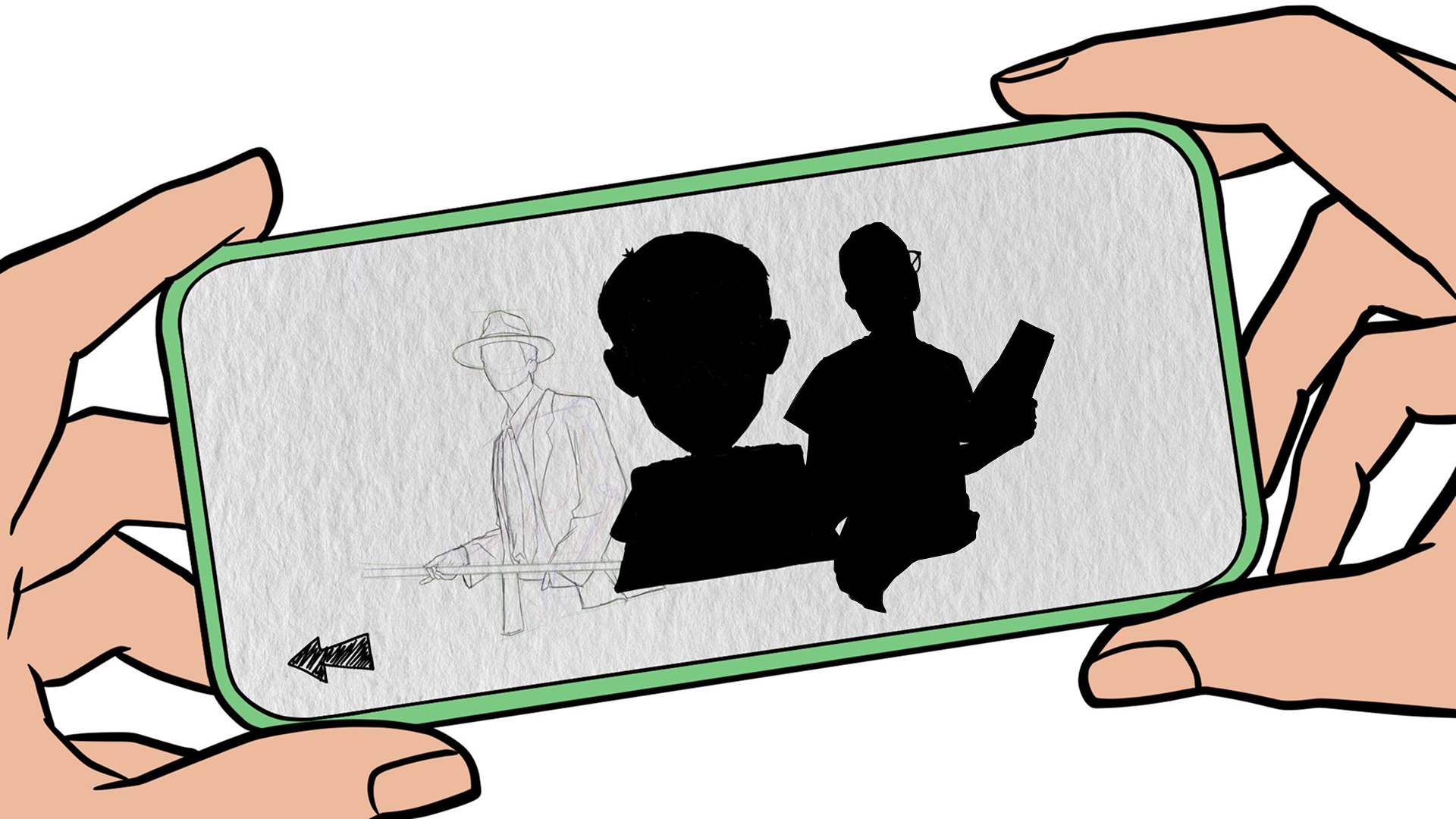
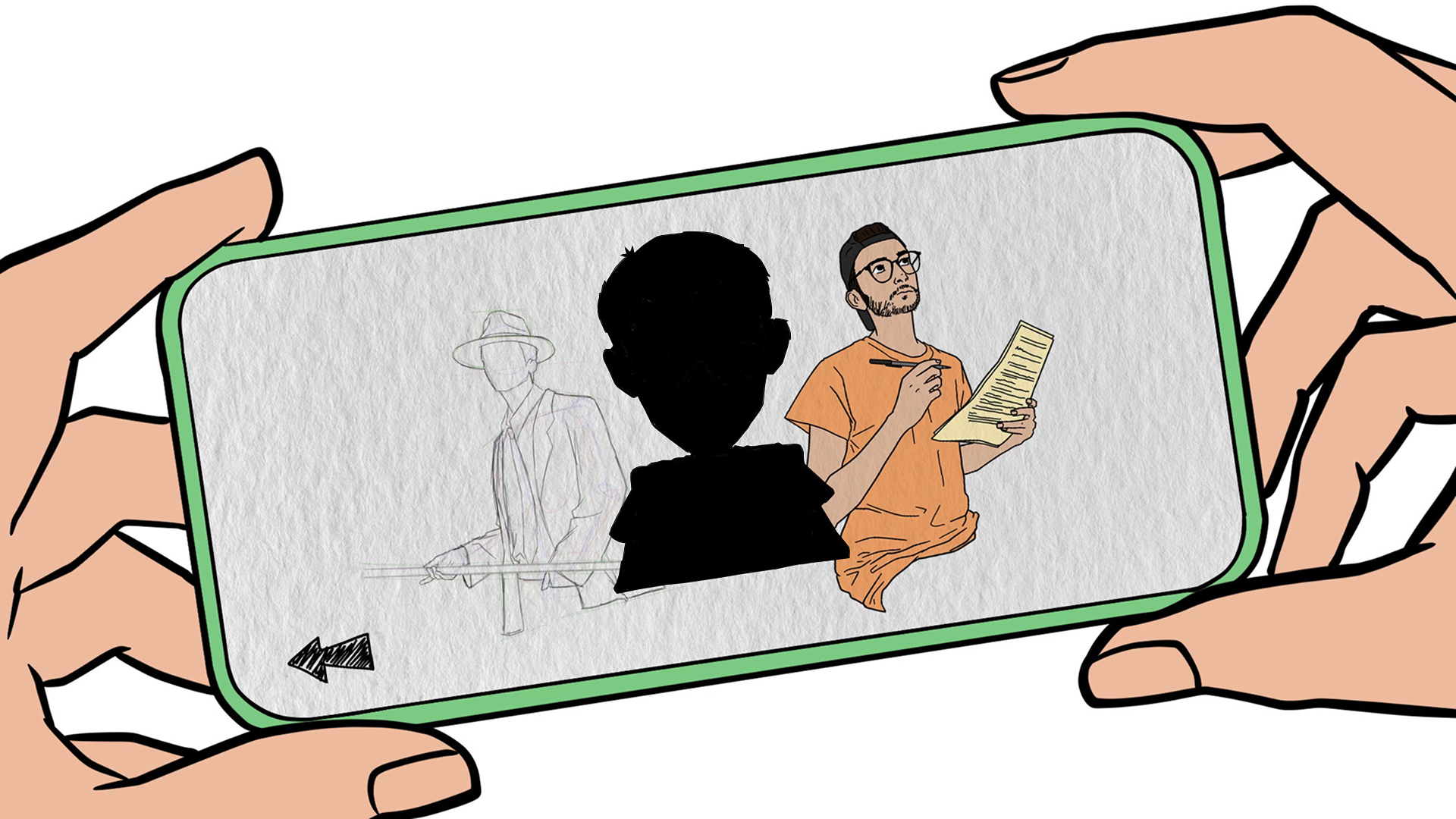
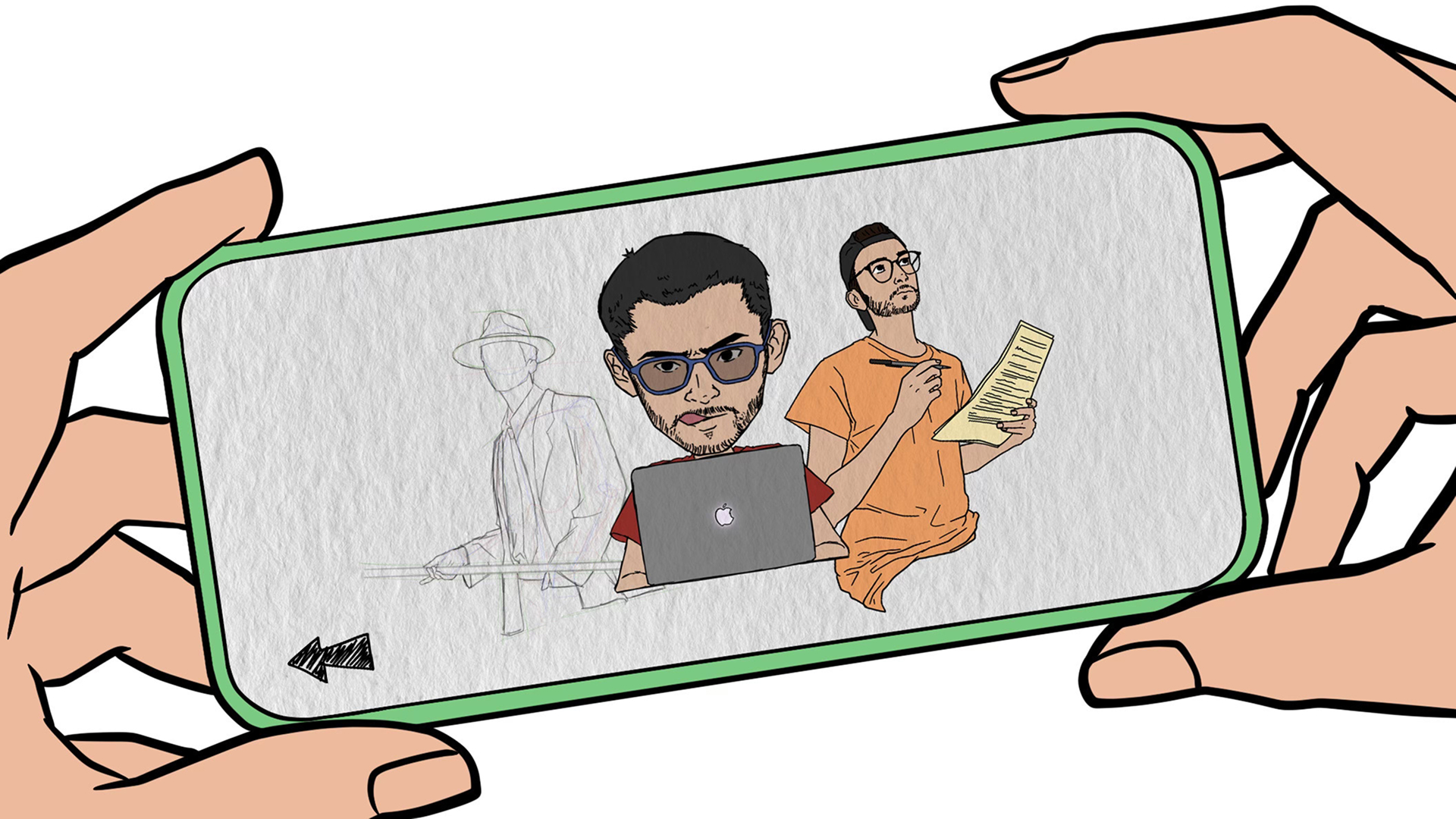
After doing that, I made the “Target Audience” slides. I structured them as some options in a phone screen since you access those by clicking on the phone in the journal screen. When you get to the Target Audience main slide, you see three silhouettes. You click on them one by one to see the three different target audiences the project could potentially be for: Concept, Narrative, and Research. You unlock all three by going through each of them.
Coming up next…
- Next, I would work on the remaining two portions of the presentation: Extras and Quit (which would just bring up a thank you slide).
- I will be working on summarizing the narrative and refining it to be fit for a prototype.
- After a successful narrative is drafted, I will start scripting and storyboarding it.