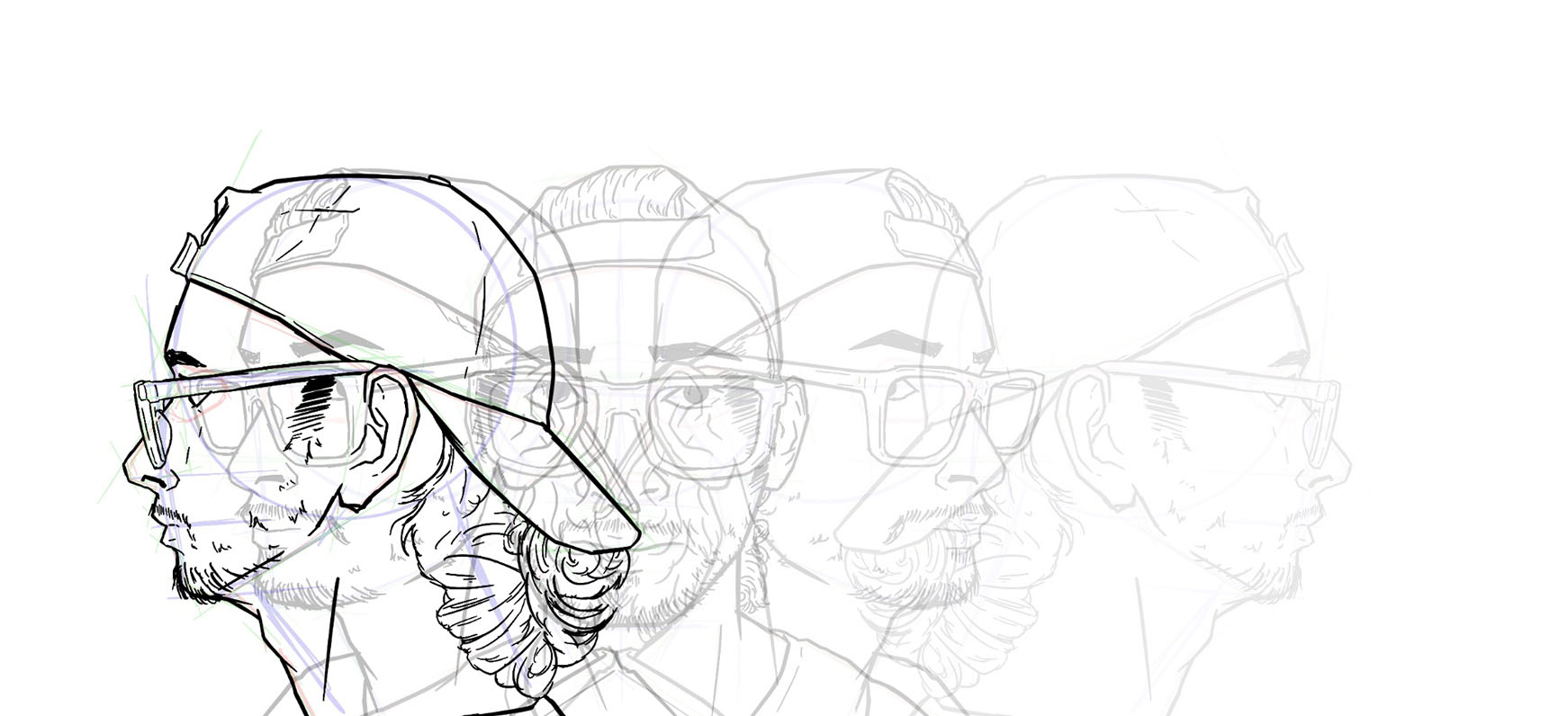
This week started where I left off last week: Storyboards. I kept working further on the storyboard sketches with a target to get them done before Tuesday, so I could incorporate them into the presentation so I could give a quick demo of what things might end up looking like in the final prototype.
Prototyping the Storyboard Sketches:
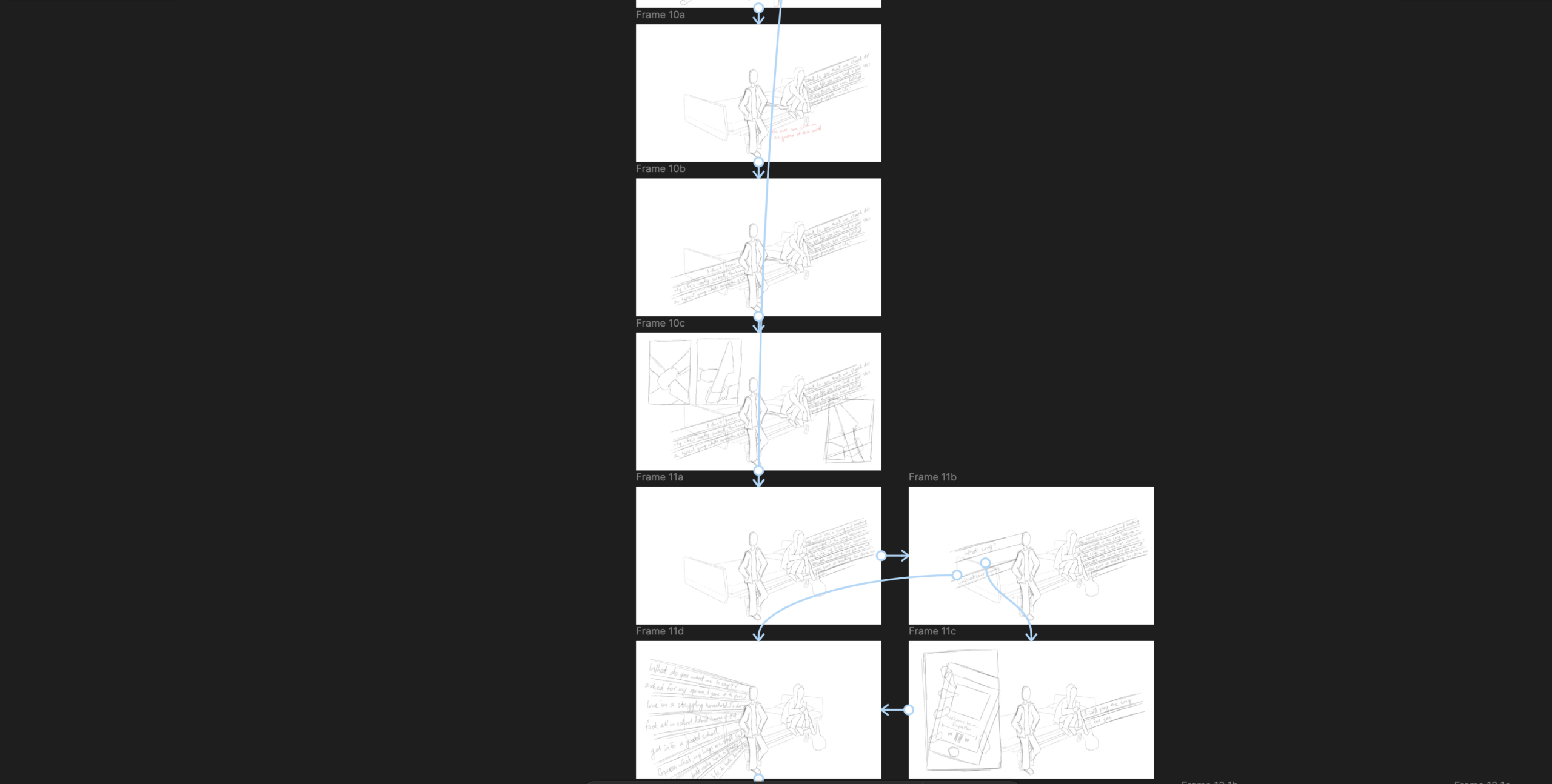
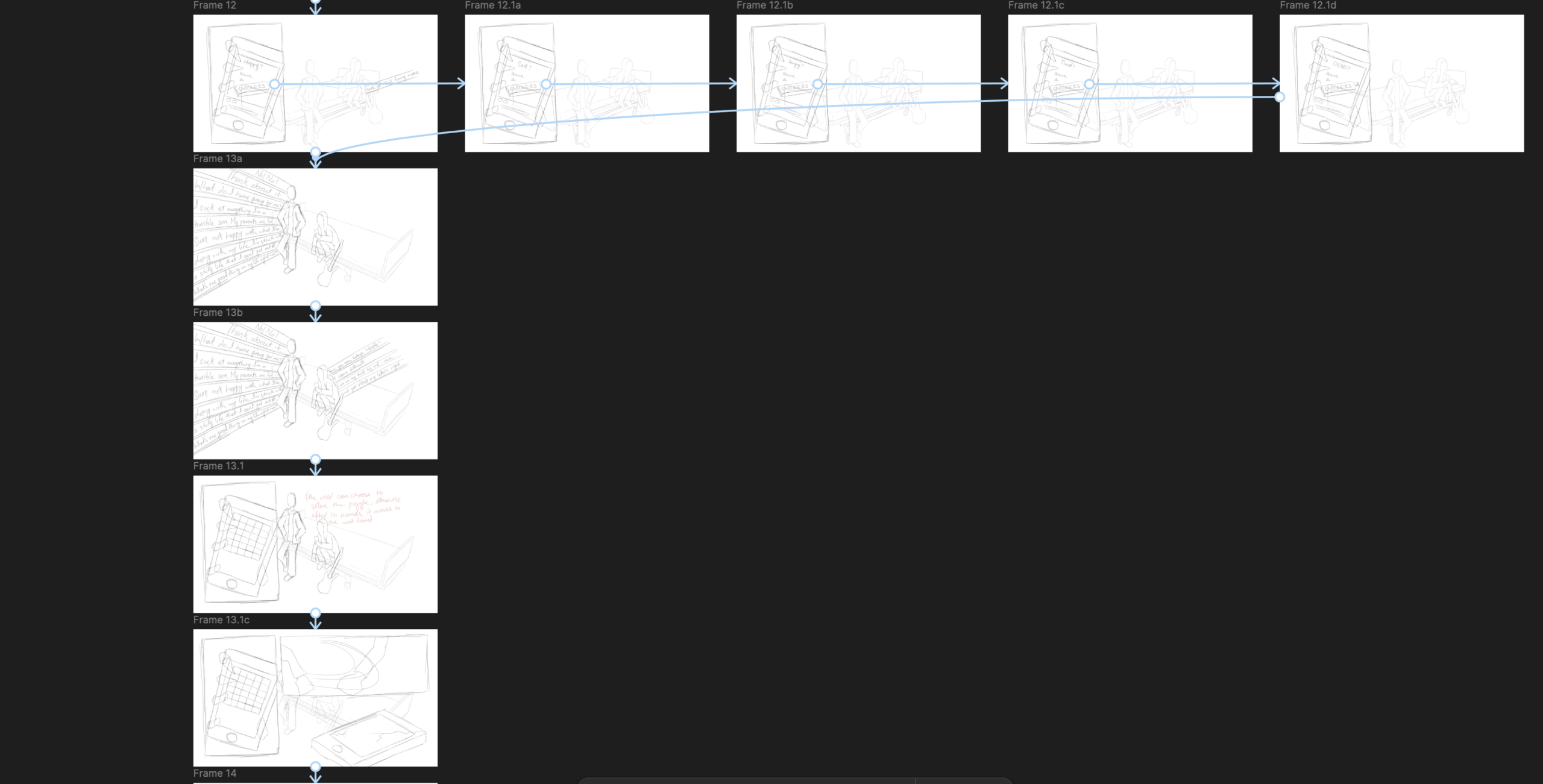
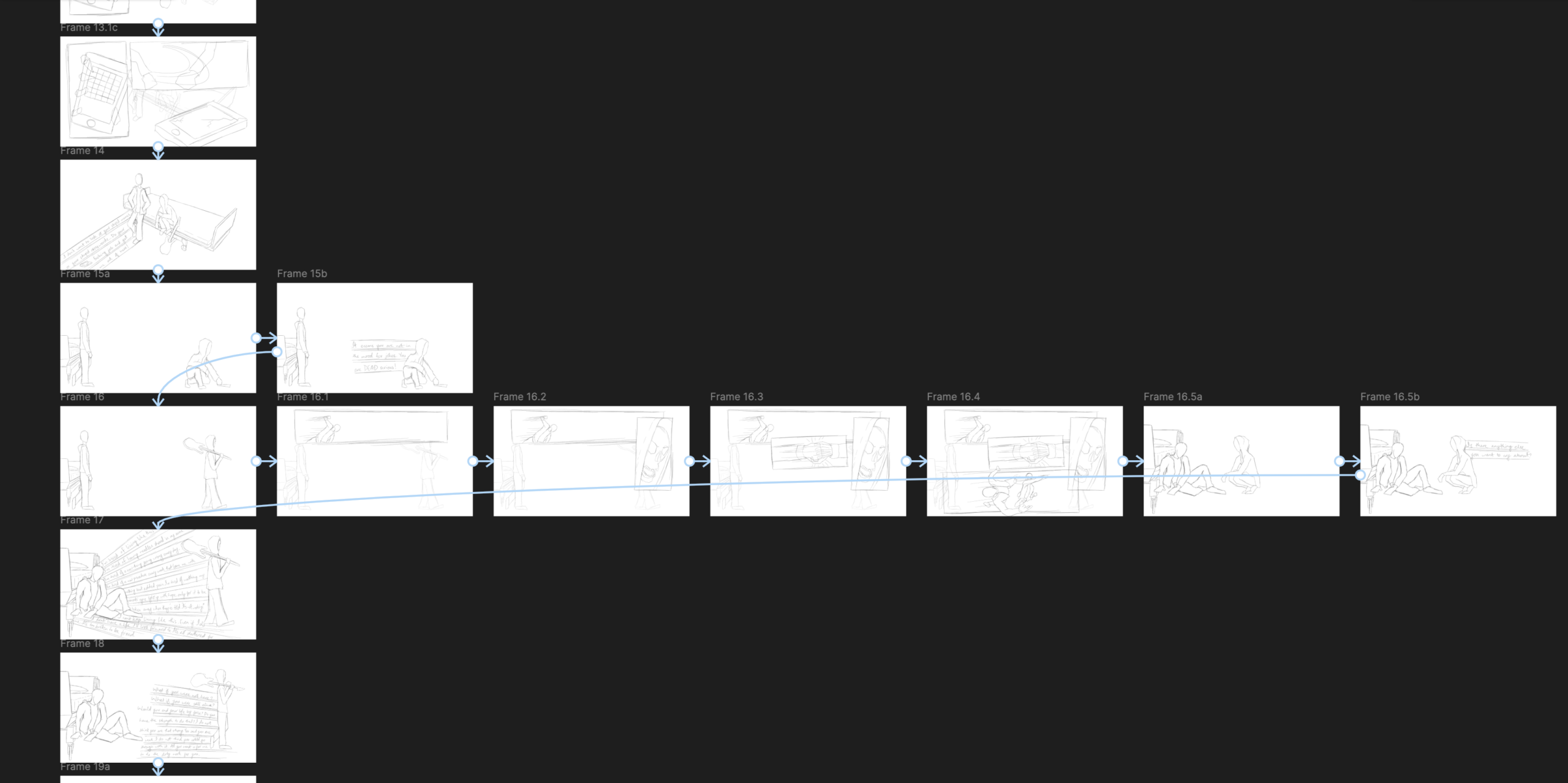
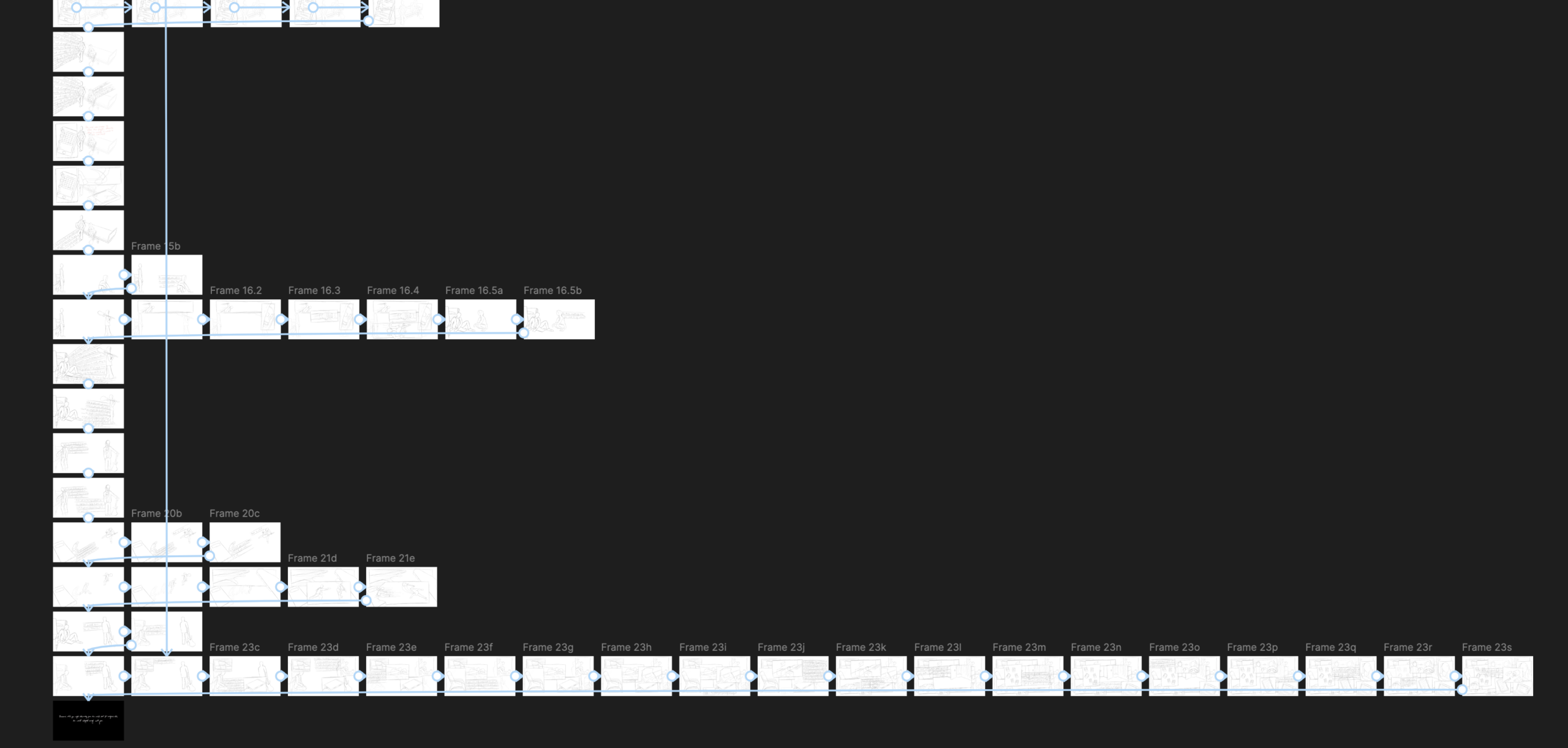
Once I was done with the sketches, I put them in Figma one after the other and got ready to prototype them into a very basic point-and-click mechanics. It was fairly straightforward for this low-fi version, and it raised a few questions for me to answer as I dive into the final high-fi version. The first thing that came up was: how do I have people proceed through the story? For now, I am thinking I have the user click on the Grim Reaper character to reveal the dialogue, in the frames where there isn’t a choice prompt. For the choice, I am thinking of adding an overlay of black and white, or a dark overlay on the entire frame except for the choices’ text, so the user is hinted to interact with one of those. Majorly, there are only two choices for the user to choose from; however, there are instances where the choices aren’t even in what they can have the Grim Reaper can say. For example, throughout the story, the boy is seen getting closer and closer to the Grim Reaper’s guitar, and on a couple of occasions, the user can click on the guitar to have the main character snatch it and kill themselves. If the user does not click on the guitar, the story continues as normal. Throughout this tussle, the Grim Reaper tries to move himself and the guitar away from the boy, every time the boy gets within arm’s reach of the guitar. To prompt the user to click on the guitar, I was thinking of ways to prompt the user to click on the guitar. I was thinking, maybe I can have the guitar react to a “human” getting close to it by glowing or glitching differently, or the second idea was to have the screen go monochromatic for a few seconds except for the guitar, and if the user clicks on the guitar within that time, the boy gets a hold of the guitar, if not, the story continues as normal.
I have other side track options to break the constant back-and-forth of dialogue between the two characters. One of them is the Grim Reaper showing the phone screen with a meme on it, which you can scroll through to look at all the different sides of the meme, and if you ignore it for 5 seconds, the story continues. In another instance, the Grim Reaper talks about a Wordle puzzle he is having trouble solving, so he shows his phone screen, and the user has the option of solving the puzzle. If they choose to ignore it for five seconds, the story continues. Aside from these mini games, I also have an instance for the user to familiarize themselves with a song that the Grim Reaper mentions. So the user can either listen to the song or move on with the story. These are some of the interactions I have incorporated into the game to keep it simple enough to execute, but interactive enough to get the idea of interactive storytelling across.
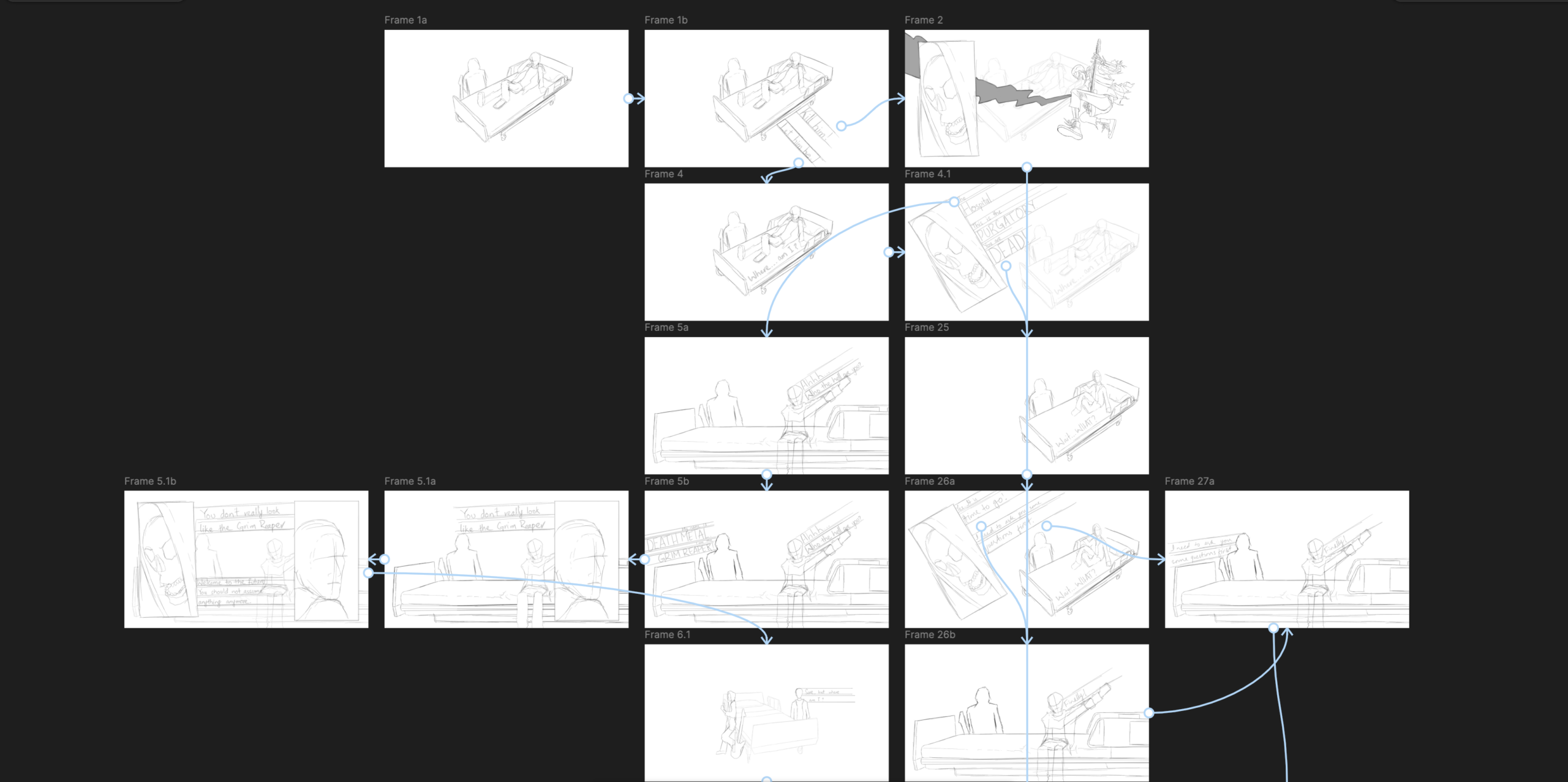
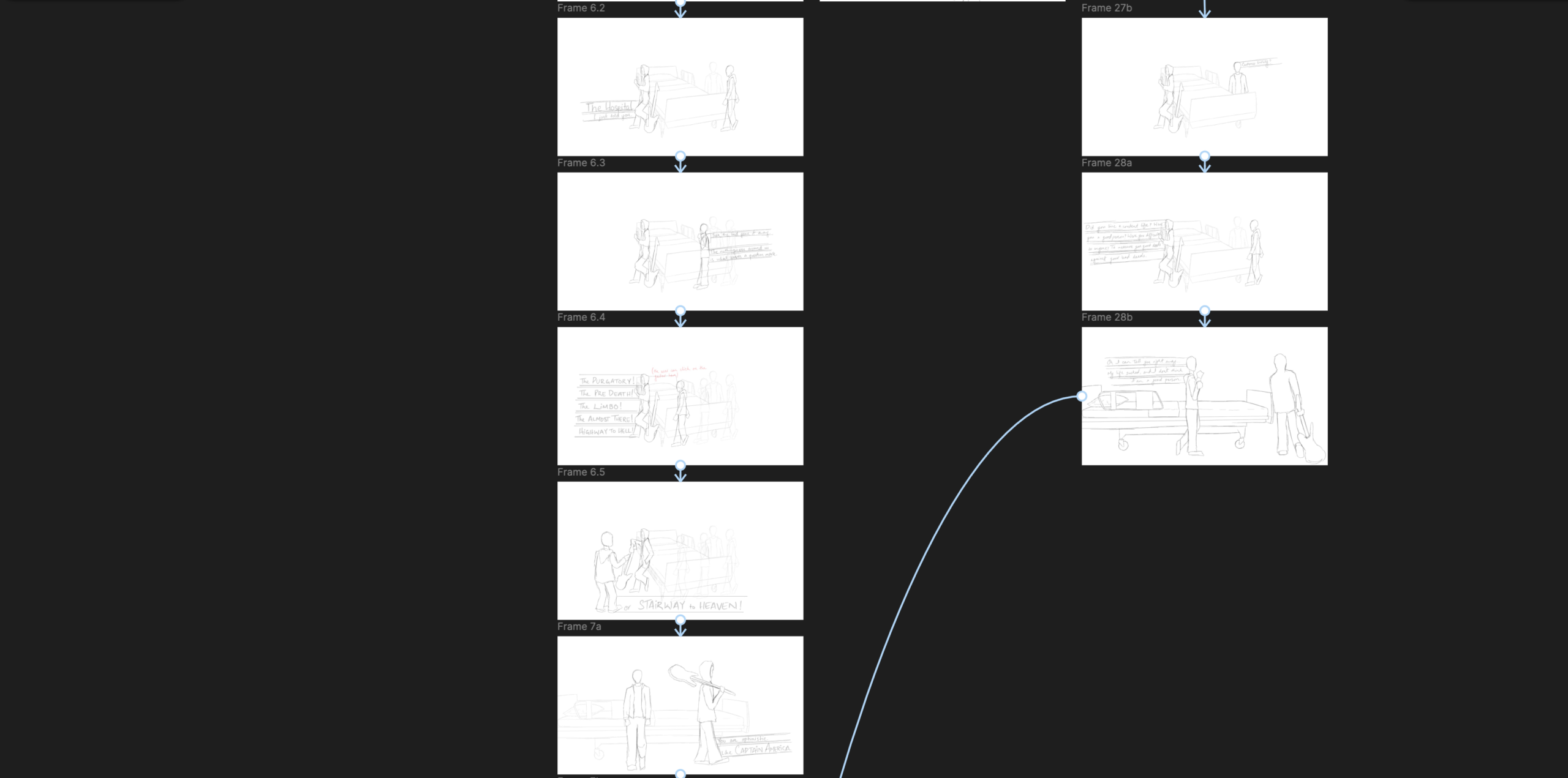
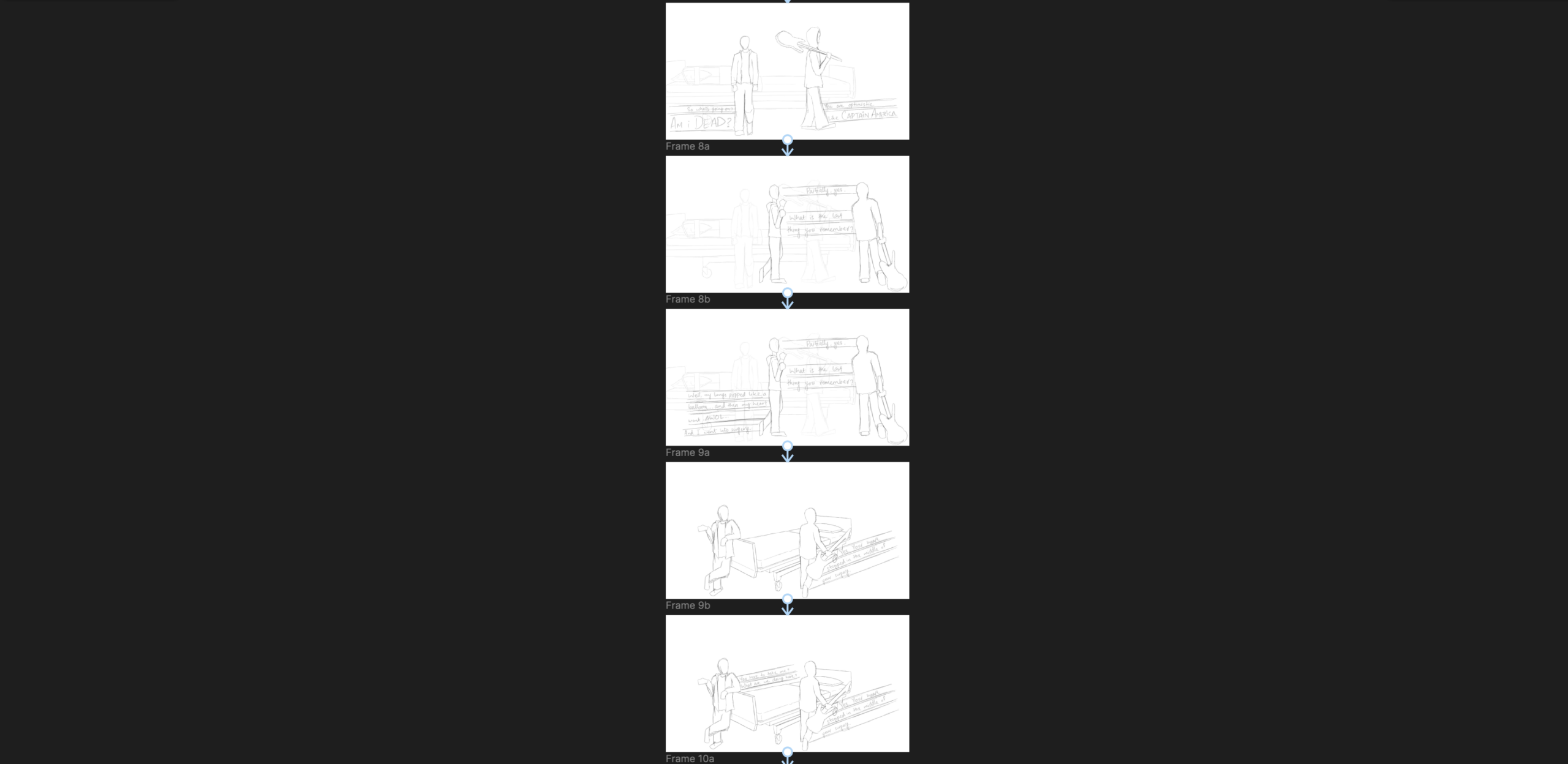
Final Presentation:
Thankfully, I was able to complete the lo-fi storyboard prototype before my presentation, so I incorporated it into my presentation. For the presentation itself, I gave a quick recap on what I am working on, what I have been doing in the MFA program so far, and what I had done up until the Midterm Presentations. After that, I talked about what I have done after the midterm mark. I had my thesis committee meeting, where we identified some major drawbacks of what I had done so far, which led me to a great solution about what I need to do moving forward and how to achieve that smartly. And finally, I gave a rundown of what I am planning on doing next, which included high-fi design for “The Purgatory,” Brainstorming and refining the next chapter of my narrative, and doing the remaining character designs.
Questions for the Audience:
- Are there any suggestions and concerns that you notice so far, especially in the lo-fi prototype?
- For the dialogue delivery, should I stick to “designed” typography, or should I do voice-overs, given that I might not be able to include a thematic soundtrack? It might be hard to find people to do voice-overs.
Feedback:
- On the voiceovers, I had a balanced reaction. While some thought that it is good to have voice-overs as it makes the experience more engaging and, for some, easier even, there were a few concerns going that route as well: for example, not finding actual voice actors, since it is crucial to capture the right feeling in the dialogue delivery, and it can make or break the entire experience.
- The project now seemed to have taken shape where people can tell what I am doing and where it is going, as opposed to where I was at the time of the midterm presentation, where it wasn’t clear where my project was going since I had a lot of work but it was all in space and had no connections to my topic, or things tying it together.
- The iterative prototyping was appreciated, and I was advised to keep following that method even when I am trying out voice-overs or otherwise: to make a few frames and text out each mode of delivery to see what works best.
Coming up next…
- My immediate next step is to design the main character for the Purgatory chapter.
- Once I have finalized what my main character is going to look like, I will move on to the High-fi frames’ illustrations.
- On the other hand, I will also start brainstorming ideas for the next chapter, using the Figma sticky note approach as I did for “The Purgatory.”